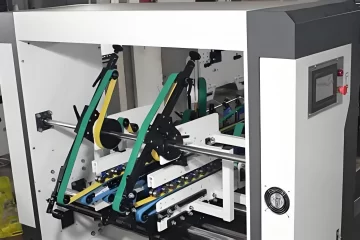
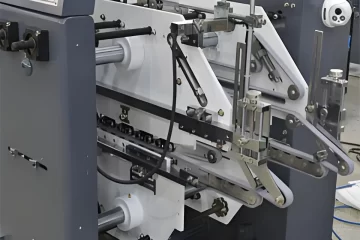
The box-making industry is at an inflection point, driven by e-commerce, sustainability, and the need for mass customization. To keep pace, folder gluer technology is undergoing a radical transformation, moving beyond pure mechanical proficiency towards becoming intelligent, agile production hubs. The next generation of machines is defined by a powerful combination: smart connectivity, blistering speed, and game-changing flexibility.
First, intelligence is being embedded on the factory floor. The integration of the Internet of Things (IoT) and Artificial Intelligence (AI) is turning folder gluers into data-rich nodes. Sensors collect real-time data on machine health, glue consumption, and production counts. This data, analyzed by AI algorithms, enables predictive maintenance—alerting operators to potential issues like bearing wear or motor inefficiency before they cause downtime. Furthermore, smart systems can automatically adjust settings for different box designs stored in memory, drastically reducing changeover times and human error, a key step towards the “lights-out” factory.
Second, the race for higher productivity continues. Market leaders are pushing the boundaries of mechanical speed and stability. Modern high-speed folder gluers are engineered to operate consistently at speeds of 450 meters per minute or more, with some models reaching up to 650 m/min. This isn’t just about raw output; it’s about achieving this speed with near-zero defect rates. Advanced feeding systems, precision glue application (including non-contact spraying), and stable material handling are all refined to ensure that higher velocity doesn’t compromise the quality of the final folded box.
Third, and perhaps most critically, is the demand for radical flexibility. The era of dedicating a machine to one box style for months is fading. Today’s market requires the ability to switch between straight-line, crash-lock, multi-corner, and even specialty boxes in rapid succession. This is addressed through modular machine design. Converters can invest in a base platform and add specific modules—like special folding units, pre-breaking sections, or inline window patching heads—as needed. This modularity extends to the rise of smaller, agile systems like smart folding robots, which use vision systems and adaptive algorithms to handle a vast range of box sizes and styles with minimal setup, perfect for short runs and mid-sized operations.

In summary, the future-proof folder gluer is not defined by a single feature, but by this powerful triad. It must be smart enough to communicate and self-optimize, fast enough to meet high-volume demands, and flexible enough to adapt to the ever-changing landscape of packaging design. For manufacturers, embracing these trends is the surest path to resilience, efficiency, and competitiveness in the dynamic years ahead.